
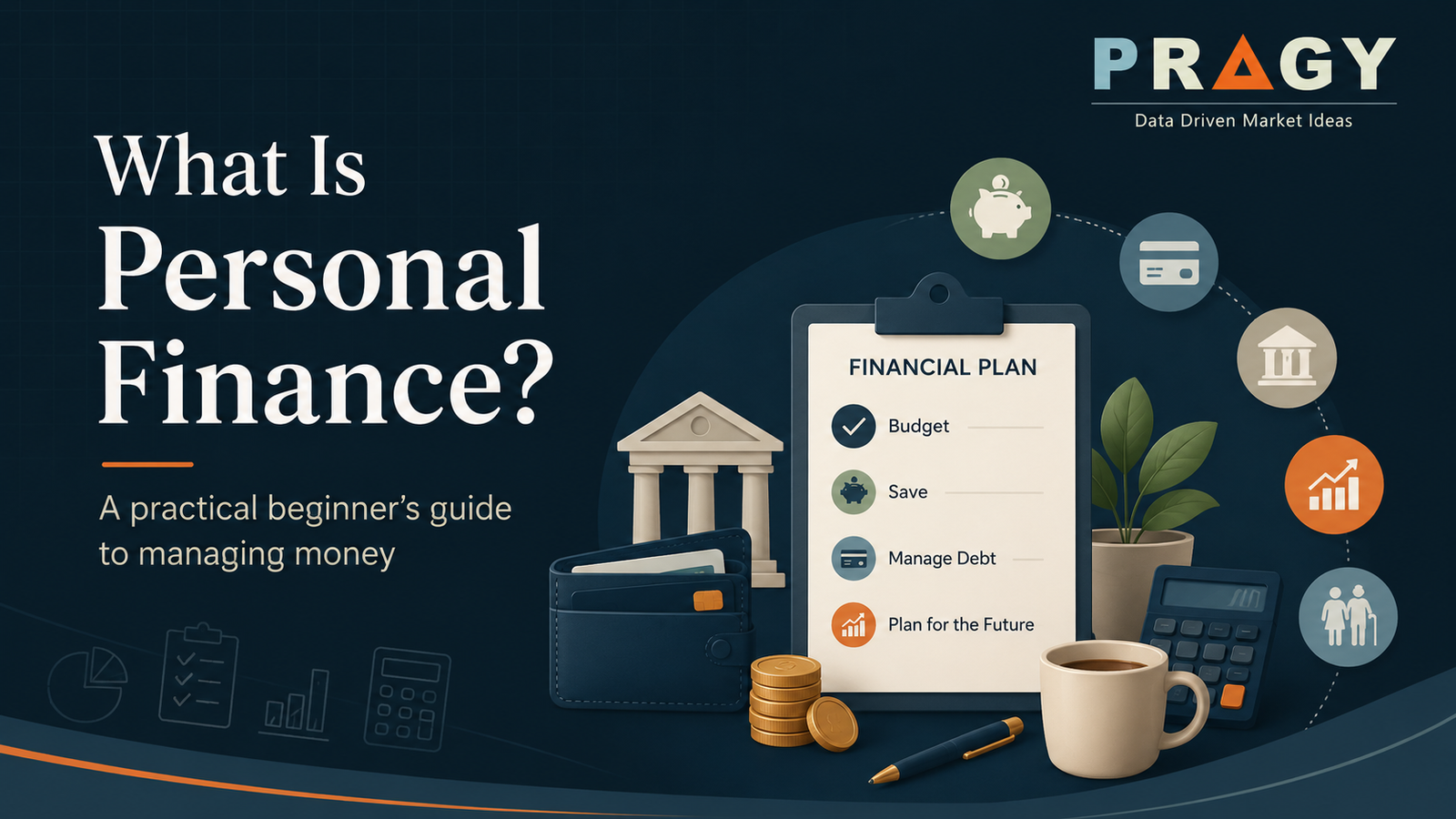
Personal finance is the way you manage your money in real life.
It is not only investing. It is not only budgeting. It is not only trying to save a few dollars on groceries. Personal finance is the full system behind how money comes in, how money goes out, how debt is handled, how savings are built, how future goals are planned, and how financial risks are managed.
In simple terms:
Personal finance is the process of organizing your income, expenses, savings, debt, accounts, insurance, taxes, and long-term financial goals.
That sounds like a lot because it is a lot. But the good news is this: you do not need to understand everything on day one. You only need a clear starting point.
That is what this guide is for.
—
Why personal finance matters
Personal finance matters because almost every major life decision touches money in some way.
Renting a home, buying a car, using a credit card, opening a bank account, paying off debt, saving for a child’s education, investing through a TFSA or RRSP, preparing for taxes, buying insurance, and planning for retirement are all personal finance decisions.
When you do not have a system, money can feel random.
You may know you are working hard, but not know where the money is going. You may have bank accounts, credit cards, loans, subscriptions, tax documents, and investment accounts scattered everywhere. You may want to save, but every month something else shows up.
That is normal. Personal finance is not about being perfect. It is about creating visibility.
When you can see your money clearly, you can make better decisions.
—
The simple version
Personal finance answers five basic questions:
- What money comes in?
- What money goes out?
- What do you own?
- What do you owe?
- What are you trying to build?
That is the core.
Before you worry about advanced investing, tax strategies, estate planning, or retirement projections, start with those five questions. They give you the foundation.
—
The main parts of personal finance
Personal finance has many pieces, but most of them fit into a few major categories.
1. Income
Income is the money you receive.
That can include employment income, self-employment income, business income, rental income, investment income, government benefits, side income, or any other regular cash inflow.
The first step is knowing how much income is reliable, how often it arrives, and whether it changes from month to month.
For example, someone with a steady paycheque may budget differently from someone who is self-employed or paid irregularly. Same game, different settings.
—
2. Expenses
Expenses are the money going out.
Some expenses are predictable. Rent, mortgage payments, car payments, insurance, phone bills, and subscriptions often repeat monthly.
Other expenses change. Groceries, fuel, gifts, travel, repairs, medical costs, school costs, and family expenses may vary.
A useful personal finance system separates expenses into groups such as:
- fixed expenses
- variable expenses
- annual or seasonal expenses
- debt payments
- savings contributions
- optional spending
This is where many people get surprised. The issue is not always one big expense. Sometimes it is ten small expenses quietly acting like they pay rent in your bank account.
—
3. Budgeting
A budget is a plan for your money.
It does not have to be complicated. A budget simply helps you understand how income, bills, spending, saving, and debt payments fit together.
A good budget should answer:
- How much money comes in each month?
- What bills must be paid?
- What expenses change every month?
- What debts need payment?
- What savings goals matter?
- What money is left after commitments?
A budget is not a punishment. It is a visibility tool.
The goal is not to judge every dollar. The goal is to stop guessing.
—
4. Saving
Saving is money set aside for future use.
Savings can have different purposes:
- emergency fund
- home repairs
- car repairs
- vacation or travel
- child education savings
- annual insurance or tax payments
- future investing
- retirement goals
The most important beginner concept is this:
Savings work better when the money has a job.
Instead of one vague savings pile, it often helps to name the goal. Emergency fund. Car fund. School fund. Tax fund. Home repair fund.
Named money is easier to protect.
—
5. Emergency fund
An emergency fund is a cash buffer for unexpected expenses or income disruption.
It can help with situations such as:
- urgent car repairs
- medical or dental costs
- temporary job disruption
- home repairs
- family emergencies
- surprise travel needs
The exact amount depends on personal circumstances. A single person with low fixed expenses may need a different target than a family with children, a mortgage, and one income source.
The key idea is not perfection. The key idea is having some cash buffer so every surprise does not immediately become credit card debt.
—
6. Debt
Debt is borrowed money that must be repaid.
Common types of debt include:
- credit card balances
- lines of credit
- car loans
- personal loans
- student loans
- mortgages
- business loans
Debt is not all the same. The cost of debt depends on the interest rate, fees, repayment terms, minimum payments, and how long the balance remains outstanding.
A beginner debt review should include:
- balance
- interest rate
- minimum payment
- payment due date
- lender or institution
- whether the rate is fixed or variable
Once you see those details, debt becomes easier to organize.
Still not fun. But easier. Financial adulting is not always glamorous.
—
7. Credit
Credit is the ability to borrow money or access a credit limit.
Credit cards, lines of credit, loans, and mortgages are all connected to credit in different ways.
Important credit concepts include:
- credit report
- credit score
- payment history
- credit utilization
- credit limit
- credit inquiries
- minimum payments
- collections
Credit matters because it can affect borrowing options, interest rates, rental applications, and other financial processes. That does not mean you need to obsess over every point. It means you should understand the basics and review your information periodically.
—
8. Banking
Banking is the foundation of day-to-day money movement.
Your banking system may include:
- chequing accounts
- savings accounts
- high-interest savings accounts
- joint accounts
- debit cards
- overdraft protection
- e-transfers
- automatic bill payments
- direct deposits
- online banking
Good banking organization helps you understand where money lands, where bills are paid from, where savings sit, and where fees may apply.
A bank account is not just a place where money exists until bills attack it. It should have a clear role.
—
9. Registered accounts
In Canada, registered accounts are account types with specific rules and tax treatment.
Common examples include:
- TFSA
- RRSP
- FHSA
- RESP
- RDSP
- RRIF
Each account type has a different purpose, eligibility rules, contribution rules, withdrawal rules, and tax treatment.
A simple beginner way to think about them:
- TFSA: flexible tax-free savings/investing structure
- RRSP: retirement-focused tax-deferred savings structure
- FHSA: first-home savings structure for eligible first-time home buyers
- RESP: education savings structure for a beneficiary
- RDSP: disability savings structure for eligible beneficiaries
- RRIF: retirement income structure generally connected to RRSP conversion
This is general education only. Registered account rules can change, and personal situations vary. Always confirm current details with official sources or qualified professionals.
—
10. Investing basics
Investing is one part of personal finance, but it is not the whole thing.
Investing usually comes after a person understands basic cash flow, debt, emergency savings, account types, and risk.
Basic investing concepts include:
- risk and return
- stocks
- bonds
- ETFs
- mutual funds
- GICs
- diversification
- fees
- time horizon
- account type vs investment choice
One common beginner mistake is mixing up the account and the investment.
A TFSA is an account type. An ETF is an investment product. A brokerage account is a platform or account setup. These are not the same thing.
Personal finance helps you understand the container before worrying about what goes inside it.
—
11. Taxes
Taxes affect personal finance because income, investments, registered accounts, self-employment, capital gains, dividends, rental income, and retirement income may all have tax consequences.
Beginner tax topics include:
- tax slips
- deductions
- credits
- marginal tax rate
- average tax rate
- RRSP deductions
- TFSA rules
- FHSA deductions
- capital gains
- interest income
- dividend income
- self-employment tax set-asides
Tax content should always be handled carefully. General education is fine. Personalized tax advice is not.
—
12. Insurance and protection
Insurance is part of personal finance because it helps manage risk.
Common insurance topics include:
- health benefits
- life insurance
- disability insurance
- critical illness insurance
- auto insurance
- home insurance
- tenant insurance
- travel insurance
- business insurance
Insurance is not the most exciting topic. Nobody wakes up hyped to read policy wording with coffee. But it matters because one major event can affect years of financial progress.
The goal is to understand the purpose, coverage, exclusions, costs, and trade-offs.
—
13. Retirement and future planning
Retirement planning is the long-term part of personal finance.
It may include:
- retirement savings
- CPP and OAS basics
- employer pensions
- RRSP and TFSA use
- RRIF basics
- withdrawal concepts
- inflation
- healthcare costs
- retirement income sources
At the beginner level, the goal is not to calculate every future dollar perfectly. The goal is to understand the building blocks and start asking better questions.
—
14. Estate basics and documents
Estate planning is about what happens to your assets, accounts, and responsibilities if you die or become unable to manage your affairs.
Basic topics include:
- wills
- powers of attorney
- beneficiaries
- executors
- joint accounts
- insurance beneficiaries
- digital assets
- final document checklist
This area can involve legal rules that vary by province and personal situation. Treat estate content as general education only and consult qualified legal professionals for personal decisions.
—
Personal finance is a system, not a single task
The easiest way to understand personal finance is to think of it as a system.
Your money system includes:
- income
- expenses
- accounts
- debt
- credit
- savings
- investing
- insurance
- taxes
- documents
- future goals
When one part is disorganized, the whole system can feel stressful.
For example, if expenses are unclear, saving becomes harder. If debt interest is ignored, cash flow gets squeezed. If documents are scattered, tax season becomes painful. If account types are misunderstood, investing decisions can become confusing.
A better system does not make life perfect. It makes the next step easier to see.
—
A simple 7-step personal finance starting point
If you are new to personal finance, start here.
Step 1: List every account
Write down:
- chequing accounts
- savings accounts
- credit cards
- lines of credit
- loans
- registered accounts
- brokerage accounts
- business accounts, if applicable
You cannot manage what you cannot see.
—
Step 2: Track income and expenses
Write down monthly income and major expenses.
Start with the obvious items:
- housing
- groceries
- transportation
- insurance
- phone/internet
- utilities
- subscriptions
- debt payments
- childcare or school costs
- savings transfers
Do not worry about perfection. Get the big picture first.
—
Step 3: Calculate net worth
Net worth is:
What you own minus what you owe.
Assets can include cash, savings, investments, property, vehicles, and business assets.
Debts can include credit cards, lines of credit, loans, mortgages, and other obligations.
Net worth is a snapshot. It is not your identity. It is just a number that helps you measure progress over time.
—
Step 4: Review debt and interest rates
For each debt, write down:
- balance
- interest rate
- minimum payment
- due date
- lender
- fixed or variable rate
This helps you understand which debts are expensive and which payments create the most pressure.
—
Step 5: Set an emergency fund target
Pick a starter target first.
For example, some people start with a small cash buffer before aiming for a larger emergency fund. The right amount depends on income stability, family needs, housing costs, debt obligations, and personal circumstances.
Use “target” language, not perfection language.
—
Step 6: Understand account types
Before investing or moving money around, learn what each account is designed for.
Start with:
- TFSA
- RRSP
- FHSA
- RESP
- non-registered account
The account type affects rules. The investment choice affects risk. They are connected, but they are not the same thing.
—
Step 7: Create a monthly money review
Pick one recurring day each month to review:
- account balances
- upcoming bills
- debt balances
- savings progress
- subscriptions
- tax documents
- financial goals
- next actions
A monthly routine turns personal finance from a panic event into a process.
—
Common personal finance mistakes
Mistake 1: Starting with investing before organizing cash flow
Investing matters, but it is harder to invest consistently if basic cash flow is unclear.
Before chasing returns, understand your income, expenses, debt, savings, and emergency fund target.
—
Mistake 2: Ignoring interest rates
A balance is only part of the story. The cost of borrowing matters too.
Two debts with the same balance can have very different impacts if one has a much higher interest rate.
—
Mistake 3: Treating a budget like a punishment
A budget should help you understand your money, not make you feel like you failed at being an adult.
The goal is awareness, not guilt.
—
Mistake 4: Forgetting annual expenses
Many budgets fail because they only track monthly bills.
Annual insurance, property tax, school costs, car repairs, travel, gifts, memberships, and professional fees can all show up later and wreck the plan.
This is why sinking funds can help.
—
Mistake 5: Confusing accounts with investments
A TFSA is not an investment by itself. An RRSP is not an investment by itself. These are account structures.
What you hold inside the account is a separate decision.
That distinction matters a lot.
—
What personal finance is not
Personal finance education is not the same as personalized financial advice.
This article does not tell you:
- which account to open
- which credit card to use
- which debt to pay first
- how much to invest
- which investment to buy
- what tax strategy to use
- what legal estate documents you personally need
Those decisions can depend on income, debts, family situation, risk tolerance, taxes, location, goals, and legal details.
The purpose here is education: understand the map before choosing a road.
—
Where to go next
Use these guides and tools to continue:
- Personal Finance Hub
- Start Here: Personal Finance Basics
- Budgeting & Saving
- Banking Basics
- Credit Cards
- Debt & Credit
- Registered Accounts
- Personal Finance Calculators
If some pages are still being built, start with the Personal Finance Hub and the Start Here page.
—
Personal Finance Starter Checklist
Use this checklist as a first pass.
Accounts
- List bank accounts
- List credit cards
- List lines of credit and loans
- List registered accounts
- List brokerage accounts
- Confirm where paycheques are deposited
- Confirm where bills are paid from
Cash flow
- Track monthly income
- Track fixed expenses
- Track variable expenses
- Identify subscriptions
- Identify annual or seasonal expenses
Debt and credit
- List balances
- List interest rates
- List minimum payments
- List due dates
- Review credit report basics
Saving and goals
- Set emergency fund target
- Name short-term savings goals
- Name family or education goals
- List retirement questions
- Review upcoming large expenses
Documents
- Save tax slips
- Save insurance documents
- Save account statements
- Save loan documents
- Review beneficiary information where applicable
—
Final thoughts
Personal finance is not about becoming perfect with money.
It is about building a system that helps you understand what is happening, what needs attention, and what the next useful step might be.
Start small:
- list your accounts
- track your income and expenses
- calculate your net worth
- review debt and interest rates
- set an emergency fund target
- learn the basic account types
- create a monthly money routine
That is personal finance in action.
Not flashy. Not complicated. But powerful.
Education-only disclaimer
Education-only disclaimer
This content is for general financial education only. It is not financial planning, investment advice, tax advice, legal advice, debt counselling, insurance advice, estate advice, or a recommendation to buy, sell, borrow, insure, invest in, or use any specific financial product. Rules, rates, programs, and personal circumstances may change. Confirm details with qualified professionals, official sources, or financial institutions before making financial decisions.